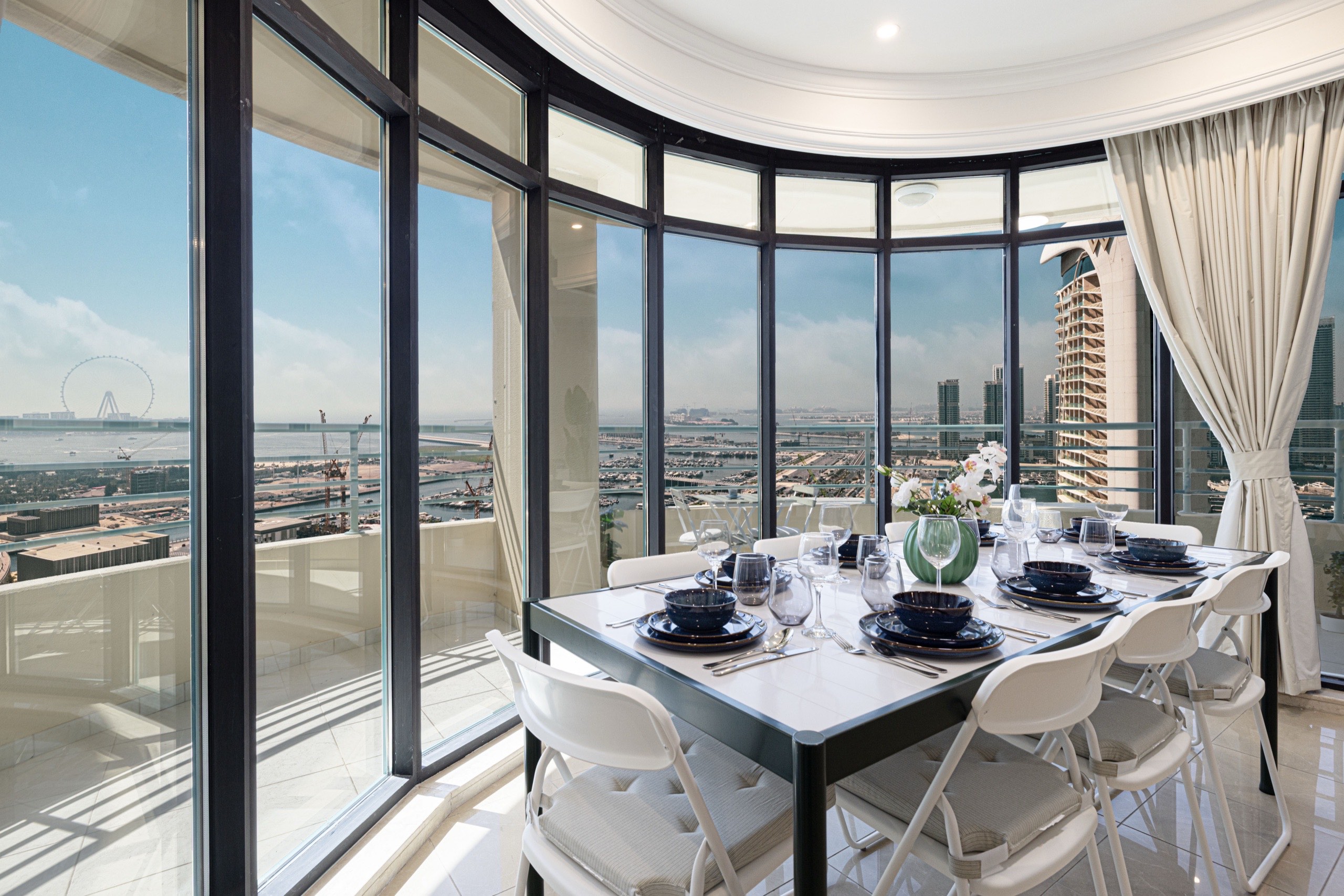
Dubai has no short-term rental night cap. Decree No. 41 of 2013 regulates the activity through a permit issued unit by unit, with no limit on nights per year. In Paris, a primary residence has been capped at 90 days a year since 1 January 2025; in Nice, at 120 days since 1 September 2026.
Is there a short-term rental night cap in Dubai?
No. The governing text, Decree No. 41 of 2013 on leasing out holiday homes (furnished units let by the night), sets no maximum number of nights per year. Article 8 requires the licensee to lease the unit to guests "on a daily, weekly, monthly, or annual basis". Executive Council Resolution No. 49 of 2014, which sets fees and fines, contains no annual cap either.
Dubai controls short-term rental upstream, through three levers:
- The licence: no one may carry on the activity without authorisation from the DET (Department of Economy and Tourism, formerly DTCM), under Article 3 of the decree.
- The permit per unit: each unit let short term receives its own holiday home permit, valid for 3 to 12 months and then renewed.
- Operating obligations: insurance valid for the full licence term, guest registration in the DET's electronic system, and letting the whole unit only (Article 8).
France works the other way round: it limits the nights of a primary residence and makes everything else subject to a change-of-use authorisation.
Paris 90 days, Nice 120 days, Dubai no cap: the three frameworks compared
The table compares the rules in force on 3 October 2026. French fines come from the French Ministry of Ecological Transition's practical guide (September 2025), which dates their increase to May 2026. Dubai fines come from Decree No. 41 of 2013 and Resolution No. 49 of 2014.
| Rule | Paris | Nice | Dubai |
|---|---|---|---|
| Night cap, primary residence | 90 days a year since 1 January 2025 | 120 days per calendar year since 1 September 2026 (90 days from 1 January to 31 August 2026) | None |
| Property that is not the primary residence | Change of use with compensation | Change of use from the first night: one temporary 5-year non-renewable authorisation, or compensation | Same regime as any unit: holiday home permit |
| Registration | Number required on every listing | Number required on every listing | Permit per unit, 3 to 12 months, renewable |
| Fine, exceeding the cap | Up to €15,000 per property since 20 May 2026 | Up to €15,000 per property since 20 May 2026 | Not applicable |
| Fine, no registration or permit | Up to €10,000 since May 2026 | Up to €10,000 since May 2026 | AED 2,000 for letting a unit without DET approval, AED 5,000 for operating without a licence |
| Fine, illegal change of use | Up to €100,000 since November 2024 | Up to €100,000 since November 2024 | Not applicable |
| General fine scale | Depends on the offence | Depends on the offence | AED 200 to 20,000, doubled for a repeat offence within a year, AED 100,000 maximum |
Two points to watch. The Métropole Nice Côte d'Azur is preparing new rules for 1 January 2027. In France, the national online registration service is announced for the fourth quarter of 2026. The full Paris framework is on our page on compliance in Paris and Île-de-France.
Does the 90 or 120-day cap apply to an investment property?
The French cap targets the primary residence: a home occupied at least eight months a year. An investor who does not live in the property falls under another regime, the change of use (the mayor's authorisation to turn a home into tourist accommodation). That regime makes the activity itself subject to authorisation, whatever the number of nights.
- Paris: a second home let as tourist accommodation requires compensation, meaning the conversion into housing of premises that had another use (office, shop).
- Nice: authorisation is required from the first night. An owner can obtain a single temporary authorisation without compensation, for 5 years and non-renewable. In four districts, at most 691 authorisations are open for applications filed between 1 September and 31 December 2026.
- Dubai: an investment unit follows the same procedure as an owner-occupied one. The permit is issued per unit, with no published quota and no compensation.
For an owner who does not live in the property, the main French constraint is therefore access to authorisation. The legal options in Nice, including the bail mobilité (a furnished lease of 1 to 10 months), are set out in Nice's cap and the mobility lease.
How many nights can you let with and without a cap: the calculation
The calculation compares the maximum number of sellable nights for a primary residence in Paris and Nice, and for a unit in Dubai. The assumptions are arbitrary and only isolate the effect of the cap:
- Occupancy rate (the share of nights booked) of 70% for Dubai, applied to the 365 nights of the year. In Paris and Nice, the cap is assumed to be reached.
- Same average nightly rate in all three cities, set at 100 currency units, to neutralise price differences between markets.
- Same annual fixed costs (service charges, insurance, utilities subscriptions) of 9,000 units, spread over the nights sold.
| Illustrative calculation | Paris, primary residence | Nice, primary residence | Dubai |
|---|---|---|---|
| Maximum sellable nights | 90 | 120 | 365 × 70% = 255 |
| Share of the year | 25% | 33% | 70% |
| Gross annual revenue (100 per night) | 9,000 | 12,000 | 25,500 |
| Fixed costs per night sold | 9,000 / 90 = 100 | 9,000 / 120 = 75 | 9,000 / 255 = 35 |
At the same price, the Dubai unit sells 2.8 times more nights than the Paris primary residence and 2.1 times more than the Nice one. The second effect matters just as much for yield: fixed costs are spread over 255 nights instead of 90. In this example, the Paris home spends its entire revenue on fixed costs; the Dubai unit spends 35%.
This calculation predicts no income. Nightly rates, occupancy and costs differ widely between the three cities, and occupancy in Dubai varies by season. The published data for Dubai and Nice, from price per square metre to seasonality, is in our Dubai, Nice and Tunis comparison. The number of nights needed to cover costs in Dubai Marina is worked out in our break-even nights calculation.
What having no night cap does not solve in Dubai
Without a cap, the regulatory limit is 365 nights. The number of nights actually sold depends on other factors that an absent owner needs to control:
- Permit validity: issued for 3 to 12 months. An expired permit stops lettings until renewal.
- Building rules: since 29 January 2025, Emaar Community Management requires guests in its communities to be received at the concierge desk, with keys handed over in person.
- Seasonality: summer fills less than winter. With no cap, every empty summer night is a night lost out of 365.
- Fines: AED 200 to 20,000 per offence, doubled for a repeat within a year, with suspension of the activity for up to 6 months or cancellation of the licence.
- The statement: across 365 open nights, the gap between nights sold and nights paid is checked line by line, every month.
What Flatlab does
We manage 17 properties in Dubai, Nice, Paris and Tunisia. In Dubai, our local team runs your holiday home 365 days a year, from DET permit to guest check-out, and adjusts rates based on market data. In Paris and Nice, we combine short stays on peak dates with a mobility lease of 1 to 10 months the rest of the year. The fee is 20% all inclusive, housekeeping included, with a 3-month cancellation notice and a monthly line-by-line statement. Every Dubai estimate comes with a DET audit.
Get your personalised projection in under 24h
12-month net range · Detailed all-inclusive rate · Regulatory audit. No commitment.
Estimate my property in 60 sFAQ
Is there a 90-day rule for Airbnb in Dubai, or can you let 365 days a year?
Dubai's texts contain no 90-day limit. The 90-day figure sometimes quoted appears neither in Decree No. 41 of 2013 nor in Resolution No. 49 of 2014. A unit can therefore be let 365 days a year with a valid holiday home permit. Building rules and the title deed can still restrict short-term rental.
Does the Paris 90-day rule still apply?
Yes. Since 1 January 2025, a primary residence in Paris can be let as tourist accommodation for 90 days a year at most. Exceeding it carries a civil fine of up to €15,000 per property since 20 May 2026.
What is the Nice 120-day rule in 2026?
A primary residence can be let for 120 days per calendar year since 1 September 2026, after 90 days from 1 January to 31 August 2026. New rules are announced for 1 January 2027.
Is Dubai holiday home rental yield always higher?
No. Having no cap raises the number of sellable nights. Net yield also depends on the purchase price, service charges, actual occupancy and management fees.
This article is for information only. It does not replace professional legal or tax advice. Rules in Paris, Nice and Dubai change: check the rule in force with the municipality or the DET before letting your property.
Sources
- Légifrance, Article L. 324-1-1 of the French Tourism Code, version in force since 20 May 2026, accessed 3 October 2026.
- Decree No. 41 of 2013 Regulating the Activity of Leasing out Holiday Homes in the Emirate of Dubai (Articles 3, 7, 8 and 11), accessed 3 October 2026.
- Executive Council Resolution No. 49 of 2014, holiday home fees and fines, accessed 3 October 2026.
- Gulf News, How to legally rent your Dubai apartment or villa as a holiday home, 14 October 2025, accessed 3 October 2026.
- Gulf News, What Emaar's new rule means for Dubai holiday home operators, 3 February 2025, accessed 3 October 2026.
- Emaar Community Management, Community Rules and Regulations for Vertical Communities, Dubai Marina (PDF, January 2026), accessed 3 October 2026.
- Ville de Paris, Location limitée à 90 jours (updated 19 December 2024), accessed 3 October 2026.
- Ville de Paris, Furnished Vacation Rentals: Rules to Follow (updated 20 April 2026), accessed 3 October 2026.
- Métropole Nice Côte d'Azur, tourist tax portal, notice "Nouveau à Nice dès le 01/09/2026", accessed 3 October 2026.
- Métropole Nice Côte d'Azur, City of Nice change-of-use regulation, decision no. 2.1 of 22 June 2026, accessed 3 October 2026.
- Métropole Nice Côte d'Azur, Logements en meublés touristiques, accessed 3 October 2026.
- Office de tourisme métropolitain Nice Côte d'Azur, Guide du propriétaire de meublés de tourisme, Nice (PDF), registration number on every listing, accessed 3 October 2026.
- French Ministry of Ecological Transition, Guide pratique 2025 de la réglementation des meublés de tourisme (September 2025), maximum fines table, accessed 3 October 2026.
- Service-public.gouv.fr, Mettre son logement en location : les règles évoluent en 2026 (27 July 2026), accessed 3 October 2026.